The most thoughtful bathroom is one that does not ask for your attention. The room performs no decoration and announces nothing through color, pattern, or signage. It is organized around use, and the only objects in it are the objects that are needed. Everything else has been removed.
This is the presence of only the right things, rather than minimalism in the contemporary sense.
What restraint actually means
Restraint in design is often confused with sparseness. The two are not the same. A sparse room is empty. A restrained room is full of carefully chosen objects, each of which earns its place through use. A bar of soap that smells like nothing in particular but lathers cleanly. A towel that absorbs water without announcing the fact. A floor surface that does what a floor should do and asks for nothing in return.
Sparseness is photographable. Restraint is lived in. One can be staged in an afternoon, while the other takes years to settle into.
The restrained bathroom is built one decision at a time. The question is not "what should I add to make this more beautiful," but "what could I remove without losing function." The first question produces clutter; the second produces clarity.
The room nobody designs
Most homes treat the bathroom as a utility space. A room you pass through. A room you do not photograph. A room where the rules of design are suspended because nobody important sees it. So it accumulates plastic bottles, half-used candles, dusty diffusers, towels in three patterns, a bath mat that doesn't match the floor, a soap dish that came with the house. It becomes a closet for water-related objects.
The thoughtful bathroom rejects this. It asks the same question the well-built living room asks: does each object in this room belong here for a reason that has to do with the room itself, not with what it was on sale for.
The answer, for most objects, is no.
What remains is small. A few essential things, each chosen for what it is, not for what it adds: a piece of soap, a clean towel, a surface to step onto when leaving the bath, a vessel for water, a mirror.
The wettest room in the house
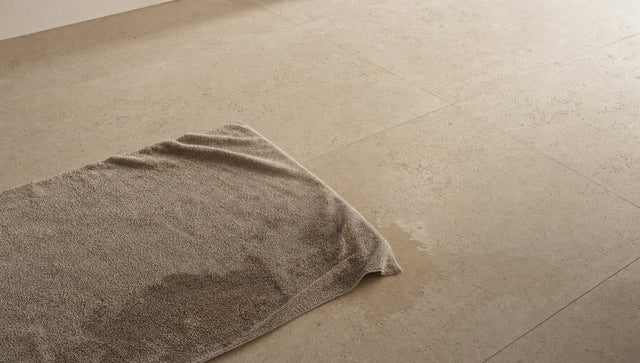
The bathroom is the wettest room in a home, and the room where most surface materials perform the worst. A fabric bath mat absorbs water and holds it for sixty minutes after each use. A textile shower curtain becomes a vertical petri dish. A wooden vanity warps under steam unless it is sealed with chemicals. A grout line, untreated, becomes the home of mold within a year.
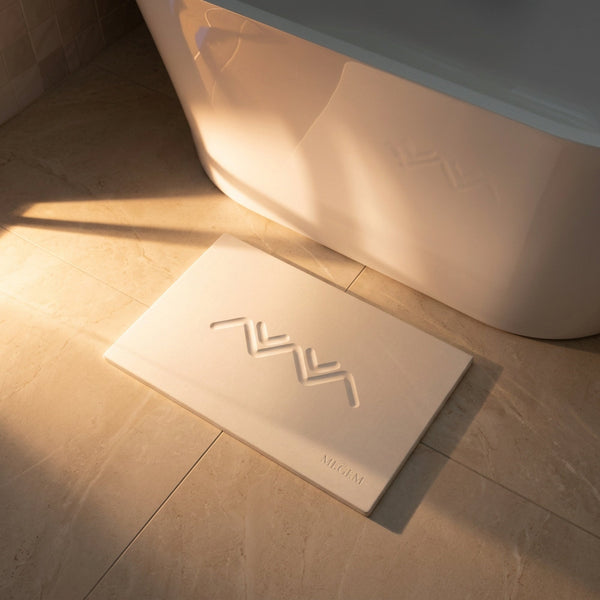
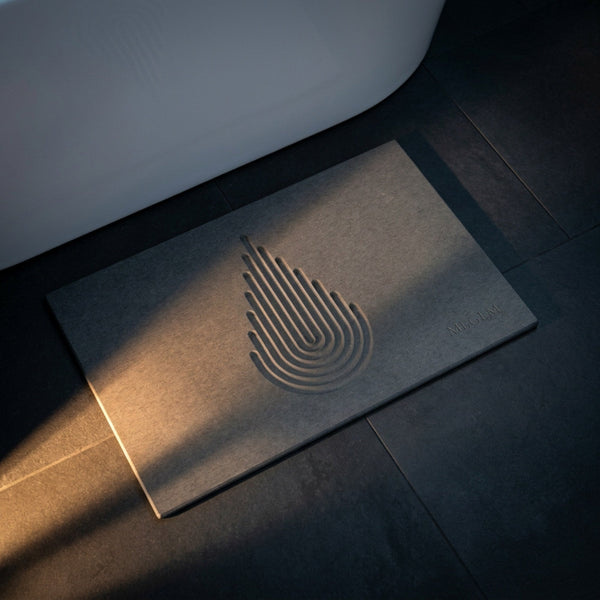
The honest bathroom acknowledges this. It chooses materials that can survive water without fighting it: stone, glass, brushed metal, solid surface composites that do not flex, tile that drains rather than collects. And, on the floor where the body steps from the bath, a surface that takes the water in and lets it go.
The honest bathroom is built to handle water the way a bathroom should. The user is never asked to manage the moisture afterward. The materials do that themselves.
What the room is for
A bathroom is not a stage. It is the first room you enter each morning and the last room you leave each night. It is where the day begins and ends. The objects in it are the objects you touch first, before the day has reached you, and last, after the day has finished with you.
That is reason enough to choose them carefully.
The well-built bathroom does not advertise itself. It will not hashtag well, will not appear on a moodboard, and is not photographed. It is a private room that the people who built it return to twice a day, every day, for years. It exists for them, not for an audience. The luxury is internal: the pleasure of touching the right material at the right moment, in a room that asks nothing of you because everything in it has already been chosen.
A surface considered for water. A room designed for use. The opposite of a showroom.