The bath mat exists because the bathroom floor is wrong.
This is the part nobody says. The fabric mat is not a thoughtful addition to a well-designed room. It is a patch over a material failure. The floor itself was chosen for the wrong reason, usually price, usually convenience, usually because the person who built the house was thinking about the kitchen.
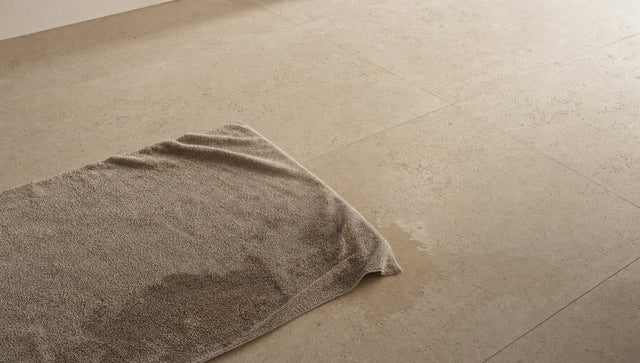
A tile floor in a bathroom is not chosen because it handles water well. It is chosen because it is the cheapest waterproof option. Then a fabric mat is added to absorb the water that the tile cannot, because tile is slippery when wet and unpleasant to step onto from the bath. The mat is a symptom of the floor's failure to do its job.
This is backwards. The right question is not "what do I put on the floor to fix it." The right question is "what should the floor be made of in the first place."
What a bathroom floor actually has to do
Three things, in this order:
1. Handle water without degrading. A bathroom floor will see water every day for the life of the building. It must absorb it, drain it, or release it back to the air. It cannot retain it or be damaged by it.
2. Stay safe to step onto when wet. No slipping, no instability. The surface must grip a wet foot.
3. Feel right under bare feet. Cool but not cold, firm but not rough, plain but not clinical. The bathroom is a private room used barefoot. The floor matters more than in any other room of the house.
Most bathroom floors fail at least one of these. Glossy tile fails the second test. Cold polished stone fails the third. Vinyl plank fails the first over time. Engineered wood is a category error, since wood does not belong in a wet room.
The fabric mat is added to compensate. It sits on top of the failed floor and tries to do what the floor should have done from the beginning.
A layered answer
The right bathroom floor is not one thing. The right answer is a system of two layers, working together.
The base layer is a hard, water-resistant material that drains well: honed natural stone, sealed concrete, large-format porcelain tile with minimal grout, or a continuous surface like polished cement screed. This layer handles the major water exposure: shower runoff, dripping bodies, splashes from the bath. It is the structural surface of the room.
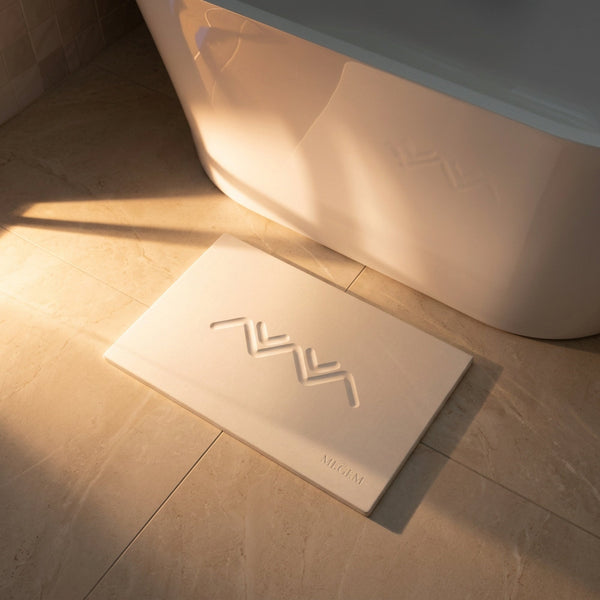
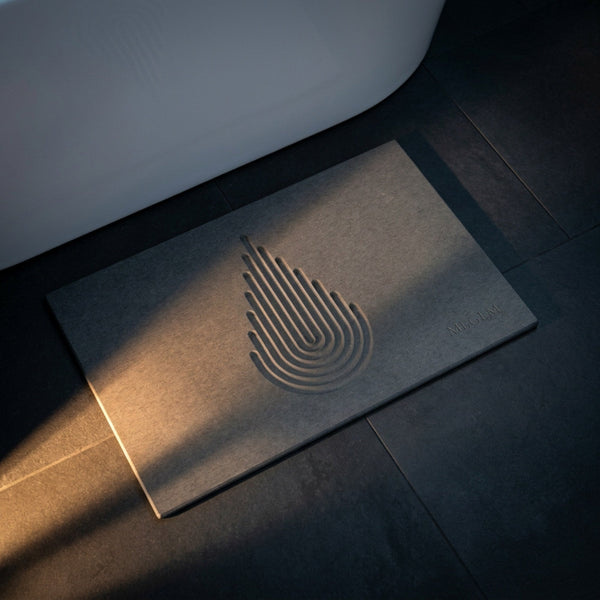
The second layer, on top, is a smaller object placed exactly where the body needs it, covering only the few square feet where you step out of the shower or bath. This is where a stone bath mat belongs.
The mat is the point of contact between a wet body and a hard floor, rather than decoration. The mat absorbs the water that otherwise would pool on the cold stone. The mat provides a moment of warmth and grip in the only place that needs it. The mat costs less than a square meter of marble and performs better than any towel ever could.
This is the right way to handle water in a bathroom. Not by hiding it under fabric, but by giving it a surface designed to absorb it.
If your floor is already wrong
If your bathroom floor is wrong, you do not need to renovate. You need to add the right object on top of it.
A stone bath mat made from diatomaceous earth turns any floor into a working bathroom floor. Tile, vinyl, sealed concrete, even old linoleum. Place the mat where the body steps out of the bath, and the failure of the underlying floor stops mattering. The mat absorbs the water. The floor stays dry. The room becomes the room it should have been from the beginning.
This is the cheapest bathroom renovation possible. In fact, it is barely a renovation. A single object, placed in the right place, is what changes the room.
A material question, not a decoration question
The mat is a material question, not a decoration question. The right material is stone. Specifically, diatomaceous earth: a porous mineral that absorbs water on contact and releases it back to the air without intervention. No chemicals, no laundering, no replacement, no fabric, no compromise.
The bathroom floor is a material question, and so is the mat that sits on it. The right answer to both is the same.
A surface considered for water.